
Am I a Good Candidate for Full Arch Dental Implants? Factors to Consider
November 17, 2025
If you’re considering full arch dental implants to replace your missing teeth, you may be wondering if you’re a good candidate for the procedure. Full arch dental implants can be an excellent option for those who are missing most or all of their teeth—but not everyone is a perfect fit. Below are the key factors we evaluate at Southland Dental Care.
Quick Answer — Who’s a Good Candidate?
Best candidates generally have: (1) good overall health, (2) enough jawbone or the ability to graft, (3) healthy, well-maintained gums, and (4) realistic expectations about timeline and upkeep. Smoking, poorly controlled medical conditions, and untreated gum disease increase risks and may require pretreatment. Unsure? A consultation with CT scan confirms candidacy and options such as All-on-4 or All-on-6.
- Next step: Book a complimentary evaluation (includes X-rays/CT).
- Also see: All-on-4 Dental Implants in Los Angeles and Financing options.
1. Overall Health
Your overall health matters. Ideal candidates are in good health and do not have uncontrolled conditions that interfere with healing (e.g., uncontrolled diabetes or significant autoimmune issues). Consistent oral hygiene lowers complications and helps long-term success.
2. Bone Density
Successful full arch implants need adequate bone to support the implants. We use a CT scan to evaluate bone quantity and quality. If there isn’t enough bone, bone grafting for dental implants may be recommended before—or in some cases during—the implant procedure.
3. Age
Age alone is not a barrier. We place full arch implants for adults of many ages. The jaw should be fully developed, and additional planning may be needed if you’ve been without teeth for a long period (due to associated bone loss).
4. Lifestyle
Smoking, inconsistent oral hygiene, and heavy teeth grinding/clenching (bruxism) can increase implant risks. We often recommend smoking cessation, hygiene optimization, and/or night guard therapy to protect your investment.
5. Expectations
Full arch implants can provide life-changing function and aesthetics—but they require a treatment timeline, follow-up visits, and daily home care. We’ll set realistic expectations about healing, temporary teeth, and final restoration timing so there are no surprises.
Recognizing Early Signs of Tooth Loss
Knowing the early warning signs can help you act before problems worsen:
- Chronic gum swelling
- Gum recession
- Persistent tooth pain
- Loose teeth in adults
- Bad breath that persists
- Advanced tooth decay
- Chronic gum disease
- Excessive tooth sensitivity
- Broken or cracked teeth
If you have one or more of these issues, a comprehensive exam can determine whether implants—or pretreatment—are right for you.
Common Causes and Risk Factors
Gum disease is the leading cause of tooth loss. Other contributors include injury, deep cavities, and systemic conditions (e.g., diabetes). Risk increases with poor oral hygiene, smoking, poor nutrition, uncontrolled high blood pressure, and certain medications.
Psychological & Physical Implications
Tooth loss can affect confidence, speech, bite comfort, and nutrition. Physically, it can lead to bone loss and bite changes that alter facial profile. Early treatment helps protect jawbone and overall oral function.
Evaluating Candidacy for Dental Implants
We provide a complimentary evaluation with X-rays and a CT scan to assess candidacy for full arch implants and discuss timelines, costs, and alternatives.
Dental Health Prerequisites
For the highest success rate, we confirm: (1) mature jawbone, (2) generally healthy gums, and (3) sufficient bone volume—or a plan for grafting.
Assessing Bone Density and Volume
If bone is limited, grafting or shorter/angled implants may be options. Your CT scan guides a predictable plan tailored to your anatomy.
Health and Lifestyle Considerations
- Uncontrolled diabetes
- Active cancer treatment
- History of jaw radiation
- Untreated gum disease
Smoking, heavy alcohol use, immunosuppressants, and severe bruxism can elevate risk. Many factors are manageable with pretreatment and protective strategies.
Age-Related Considerations
Older adults can be excellent candidates. We coordinate with your physician as needed and adjust the plan for medical safety and comfort.
When Dental Implants Might Not Be Suitable
If prerequisites aren’t met—or the risk outweighs the benefit—there are alternatives we can consider.
Potential Risk Factors
- Poor oral hygiene → gum inflammation/recession around implants
- Infection risk (e.g., uncontrolled systemic conditions)
- Implant overload or rejection risk (higher with smoking/bruxism)
We’ll help you reduce risks (smoking cessation, hygiene support, night guards) and map a safe path forward.
Exploring Alternative Solutions
If implants aren’t right for you now, options may include bridges, crowns, conventional or implant-retained (snap-in) dentures, or transitional solutions while we prepare the site.
Financial Aspects of Opting for Dental Implants
Cost varies by case complexity and whether grafting or extractions are needed. We’ll provide a written estimate and discuss ways to make care affordable.
Cost Breakdown and Analysis
We offer a complimentary exam, consultation, X-rays, and CT scan. A single-tooth implant can range around $2,500–$3,200 depending on location and bone integrity. Full mouth dental implants can start near about $13,900 (case dependent). Associated procedures may include:
- X-rays and CT scans — complimentary with us
- Bone grafting — may start around $250 depending on extensiveness
- Extractions — scope-dependent
Insurance Discounts and Payment Plans
Many plans contribute to parts of treatment (extractions, crowns). Some medical plans may help when medically necessary. We also offer flexible payment plans: single tooth implants starting near $69/month and full mouth implants from about $350/month (on approved credit). See more: implant financing options.
Frequently Asked Questions
How long will dental implants last?
With proper care and maintenance, implants can last many years. Your hygiene visits and at-home care are the foundation.
What if something needs to be fixed?
We stand behind our work. If a repair is needed, we’ll evaluate, explain options, and discuss any costs before proceeding.
Are dental implants removable?
No. Implants are designed as a fixed, permanent foundation. Full-arch bridges are removed only by your clinician if needed for maintenance.
Will the treatment be painful?
You’ll be numb and/or sedated during surgery. Some post-op soreness is normal; we provide tailored instructions and follow-up to keep you comfortable.
How long will the procedure take?
Single implants can take about an hour. Full-arch surgeries often range 2–4 hours. Timelines vary with bone grafting and your unique plan.
What may make me an unlikely candidate?
Jaw still growing, pregnancy, heavy smoking, uncontrolled systemic disease (e.g., diabetes), prior jaw radiation, severe bruxism, and certain medications (e.g., immunosuppressants). Many are manageable—get a consult.
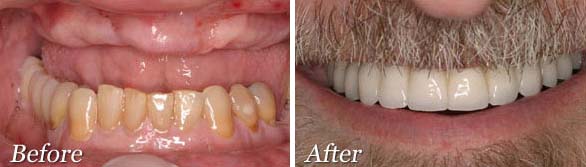
See Our Full Arch Dental Implants Before & Afters
Serving Los Angeles & Nearby
Patients visit us from Sherman Oaks, Studio City, Encino, Van Nuys, Burbank, Glendale, Pasadena, Woodland Hills, and greater Los Angeles.
References
Start with a Complimentary Candidacy Evaluation
Meet with our implant team to review your CT scan, confirm candidacy, and compare All-on-4 vs. All-on-6. We’ll outline timelines, costs, and payment options.
